Pinterest Marketing Strategy: The Complete 2026 Guide
Pinterest is not just a pretty mood-board playground. It is a visual search engine and a legitimate revenue driver for brands of all sizes. While most brands chase followers on saturated platforms like Instagram and TikTok, Pinterest users arrive with purchase intent already built in. Most searches on Pinterest are unbranded, which means your content competes on quality, not budget.
In fact, most weekly Pinterest users have purchased something from a Pin. And the vast majority of Pinners have discovered a new brand or product on Pinterest. With millions of active monthly users, the opportunity is massive.
This guide covers everything you need to build a Pinterest marketing strategy that drives real business results in 2026: setting up a business account, building a keyword strategy, creating high-performing Pins, running ads, and measuring what works.
What Is Pinterest Marketing?
Pinterest marketing is the practice of sharing content on Pinterest to get in front of new shoppers, send more traffic to your website, and spark actions that matter to your business—think email sign-ups, content downloads, and purchases.
It involves creating Pins, organizing them into boards, and using relevant keywords so your content shows up when people search. Unlike other social platforms, Pinterest content blends naturally into the feed, allowing brands to inspire rather than interrupt. As Pinterest puts it: “Content from brands doesn’t interrupt on Pinterest—it inspires.”
Pinterest functions more like a search engine than a traditional social media platform. A single Pin can continue appearing in search results, generating saves, outbound clicks, and website traffic months after it is published. Instead of competing for attention in a fast-moving feed, your content can keep working long after you create it.
Why Pinterest Marketing Matters in 2026
Brand Awareness
At the heart of Pinterest is discovery. Users take to the platform to discover new products, brands, and projects. Plus, the vast majority of Pinterest’s top searches are unbranded, making the platform a goldmine of untapped potential.
Reach High-Intent Shoppers
Most weekly Pinterest users say they are always shopping, which is a clear signal of buying intent. Pinterest reaches a significant portion of higher-income households. The platform also reaches a large percentage of younger users.
Positive Brand Perception
More than half of consumers say that Pinterest feels more positive than other social media networks. A large majority of Pinterest users interact with brand content at least once per week. For Gen Z, that engagement figure is even higher.
Long-Term Traffic
Pinterest traffic compounds over time. Unlike Instagram or TikTok posts that disappear from feeds within hours, Pins can drive traffic for months or even years. This makes Pinterest one of the most underrated marketing platforms in 2026.
Set Up a Pinterest Business Account
A Pinterest business account is a free profile type that unlocks analytics, ads, and shopping features. Without it, you are flying without data.
Step-by-Step Setup
Create a business account at business.pinterest.com. Claim your website to verify your brand and make your profile picture appear on every Pin saved from your site. This also unlocks Pinterest Analytics for all traffic coming from your domain. Optimize your profile with a keyword-rich bio and a clear business name. Organize your boards to reflect how your customers think—not just how you categorize your products.
A Pinterest business account gives you access to analytics, Pinterest Trends, website verification, and advertising tools that can help you grow your audience and measure results.
Build a Keyword and Board Strategy for Discovery
Pinterest SEO means optimizing your profile, boards, and Pins so they appear in search results. This is how new customers find you without you spending a dollar on ads.
How to Find the Right Keywords
Start in the search bar. Type a broad term related to your business and watch the guided search bubbles appear. Those colored tags show you the exact phrases people add to narrow their searches. These are your Pinterest keywords.
Use Pinterest Trends. This free tool shows you what people search for by season and region. Pinterest surfaces content before a search trend peaks. Planting early, before the trend peaks, gives you a significant advantage.
Apply keywords everywhere. Place your researched keywords in Pin titles and descriptions, board names and board descriptions, image alt text, and your profile and about text.
Organize Boards by Customer Intent
Boards tell the algorithm who this content is for, when it should surface, and what it should sit next to. Random boards mean diluted signals.
Every board should focus on a specific keyword cluster and amplify a type of buyer intent. For board titles, use the exact words your audience is searching for. Make descriptions a few sentences of natural keyword usage.
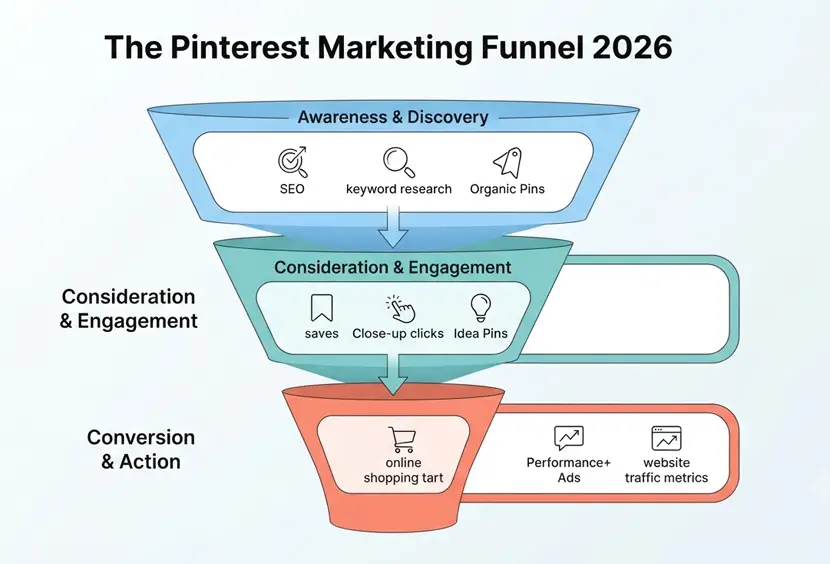
Organize boards by customer intent—one board for inspiration, one for specific products, and one for how-to content. This structure mirrors the way customers move from discovery to purchase.
Create High-Performing Pins That Rank and Convert
Every Pin competes for attention in a crowded feed. To win, you need to understand what the Pinterest algorithm rewards.
The Key Ranking Signals for a best Pinterest Marketing
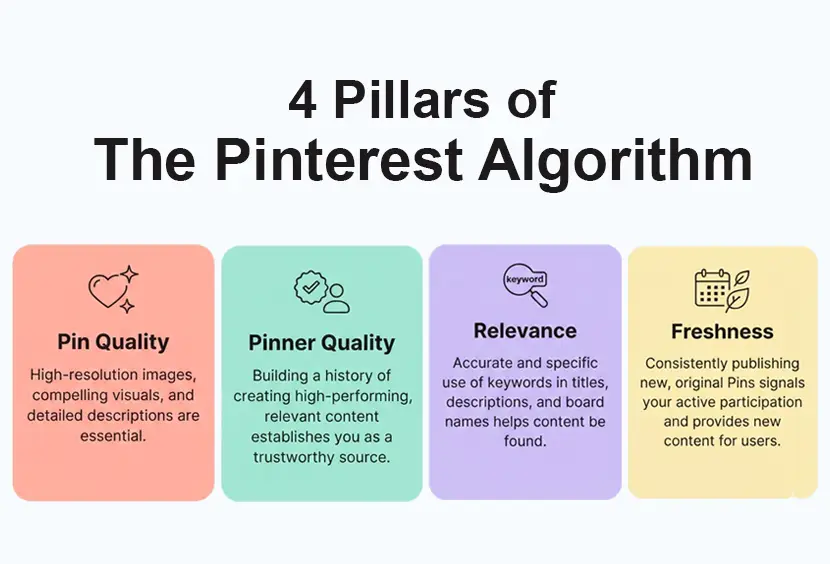
Pinterest’s algorithm follows a simple logic: reward high-quality, fresh content that resonates. It weighs several main signals.
Pin Quality – Pinterest measures each Pin’s quality and engagement, as well as how well a Pin captures attention and drives action over time. High-quality Pins are visually compelling, engaging, and popular.
Pinner Quality – The algorithm considers your account’s overall behavior and authority as a creator. This includes how frequently you post, whether you save your own content, and how audiences respond. The network rewards active, consistent contributors.
Relevance – Every Pin title, caption, and keyword sends a signal to the algorithm about your content’s quality and intent. Small refinements add up here.
Freshness – The algorithm prioritizes fresh Pins for distribution. Publishing new, keyword-optimized designs regularly—rather than re-saving duplicates—is what compounds your search reach over time.
Fresh Pins vs. Duplicate Pins
Pinterest’s recent algorithm updates reward quality, relevance, and freshness over raw volume. Fresh Pins get algorithmic priority; re-saving the same image repeatedly adds little and can look suspicious.
Current best practice is a moderate number of fresh Pins per day for most accounts. This is a deliberate shift from the old high-volume advice. New accounts should start with a few fresh Pins per week while building momentum. Active bloggers and creators can scale up from there.
Pin Types and Best Practices
Image Pins, Video Pins, Idea Pins, Product Pins, and Rich Pins each serve different purposes, from driving website traffic to showcasing products and sharing tutorials. The most successful Pins use high-resolution, vertically oriented images or videos.
Pinterest Advertising in 2026
Pinterest Performance+
Pinterest Performance+ campaigns are delivering standout results for advertisers, driving higher return on ad spend, with consistent improvements in cost per acquisition and cost per click. AI-assisted campaign tools like Performance+ can also help translate better measurement into stronger performance.
Performance+ streamlines creation by defaulting to a proven setup aligned to your objective: consolidated ad groups, broad targeting where it makes sense, and clean, full-funnel structures.
Top of Search Ads
Pinterest Top of Search ads put your brand at the top of relevant search results and in Related Pins. Your products show up where shoppers are looking, and ahead of competitors when it matters most.
AI-Powered Advertising
Pinterest is building AI into advertiser workflows with Business Assistant, an AI collaborator in Ads Manager and mobile. These updates reflect how Pinterest is evolving its platform for a more conversational, personalized, and AI-driven era of discovery.
Measure What Matters
Pinterest Analytics
Use Pinterest Analytics to see overall performance, in addition to more audience-specific insights and trends. For lower-funnel actions, check out conversion insights for better visibility into your audience’s decision-making journey from Pinterest to conversion on your site.
Web advertisers using Conversion API plus the Pinterest tag saw significant improvements in average CPA and attributed conversions compared to tag-only setups.
Key Metrics to Track
Pinterest Analytics helps you understand which content is generating impressions, clicks, saves, and outbound traffic so you can improve your strategy over time.
Track impressions and reach, saves and engagement, outbound clicks and click-through rate, and conversions and revenue.
2026 Pinterest Marketing Moments
Pinterest explicitly encourages planning around seasonal and personal moments. People on the platform are often looking ahead. The platform’s marketing calendar materials emphasize that knowing when planning behavior actually begins gives you a strategic edge: showing up early, maintaining a consistent presence, and driving full-funnel impact from discovery through to purchase.
A smart Pinterest SEO strategy combines all four: broad relevance, long-tail precision, actionable intent, and seasonal timing.
Related Article : Pinterest SEO in 2026
Conclusion about Pinterest Marketing
Pinterest marketing in 2026 is not about chasing followers or posting dozens of Pins a day. It is about treating Pinterest as the visual search engine it is—optimizing every element of your presence for discovery, creating fresh, high-quality content consistently, and measuring what works.
The biggest opportunity for businesses? The majority of searches on Pinterest are unbranded. You don’t need a massive following or a big budget to show up. You compete on the quality of your ideas.
Start with your business account. Research your keywords. Organize your boards by customer intent. Create fresh, high-quality Pins regularly. Run Performance+ ads to amplify your reach. Measure everything and iterate.
Pinterest can be used to drive website traffic, generate leads, increase product sales, and support broader marketing goals when paired with a long-term content strategy. The accounts that grow fastest typically focus on solving problems, inspiring users, or providing practical information people want to save for later.
Stop treating Pinterest like social media. Start treating it like the search engine it is. Your future traffic depends on it.
Frequently Asked Questions
How many Pins should I post per day on Pinterest in 2026?
Current best practice is a moderate number of fresh Pins per day for most accounts. This is a deliberate shift from the old high-volume advice. Pinterest’s algorithm now rewards quality, relevance, and freshness over raw volume. New accounts should start with a few fresh Pins per week while building momentum.
Is Pinterest still worth it for marketing in 2026?
Absolutely. Pinterest reaches millions of active monthly users, with the vast majority of weekly users having purchased something from a Pin. A single Pin can continue driving traffic for months or years. Most searches are unbranded, meaning you compete on quality, not budget.
What’s the most important factor for Pinterest marketing success?
Keywords and freshness are the two most critical factors. Pinterest is a visual search engine, so keyword-optimized content is essential for discovery. Publishing fresh, new Pins regularly—rather than re-saving duplicates—compounds your search reach over time.
How long does it take to see results from Pinterest marketing?
Pinterest SEO is not instant. Pins can resurface for months. Consistent, fresh, keyword-rich content builds reach over time. For best results, identify trends ahead of their peak and publish relevant content early. Give your strategy at least a few months to gather meaningful data.